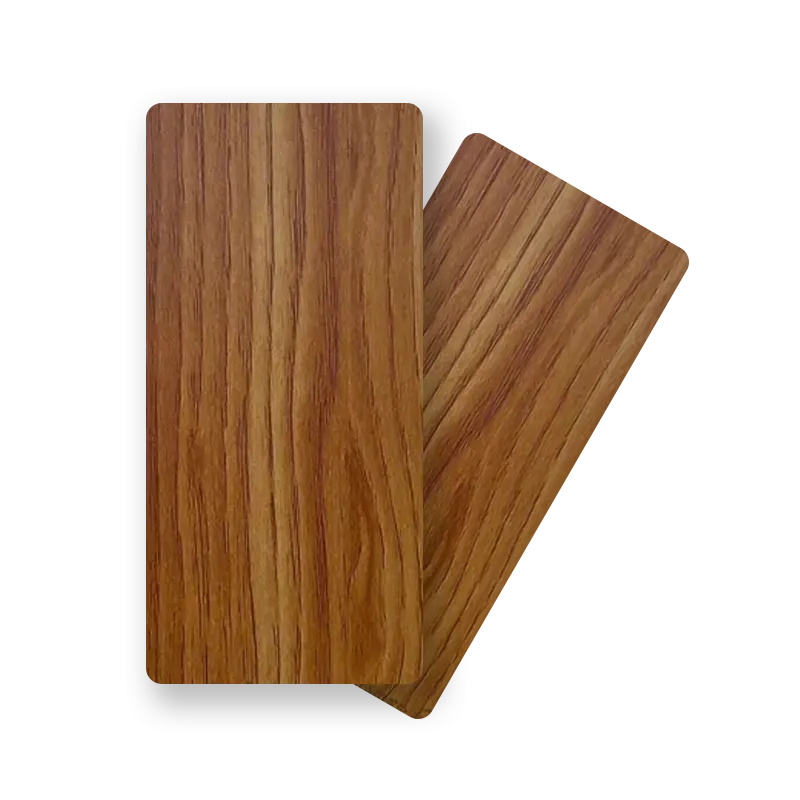
In the field of metal surface decoration, the wood grain heat transfer powder coating process is widely used in industries such as aluminum profiles, steel furniture, window and door guardrails, and architectural decoration. Among them, vacuum heat transfer and adhesive heat transfer are currently the two most mainstream processing methods.
Vacuum Heat Transfer
Base material pre-treatment
- Metal substrates (aluminum profiles, steel plates, etc.)
- Deoiling → Water washing → Phosphating / Chroming → Drying
Powder coating primer
- Specialized heat transfer powder coating for spraying
- Common: Polyester Wood Grain Base Powder
- Hybrid curing or complete curing (depending on the design of the film layer)
Coated transfer film
- Wrap the workpiece tightly with the wood grain transfer film
- The seams are sealed with heat-resistant adhesive tape
Vacuum pumping
- Place in a vacuum furnace
- Vacuum the area to ensure that the membrane and the coating are completely sealed without any air gaps.
- The vacuum level is typically: -0.06 to ~0.08 MPa
Heat transfer printing
- General furnace temperature: 180–200℃
- Time: 10 - 15 minutes
- The pattern penetrates and transfers to the coating under high temperature and negative pressure.
Cooling & Detaching
- Cooling after leaving the vacuum furnace
- Remove the transfer film
- Forming a realistic wood grain or stone texture effect on the surface
Surface cleaning
- Clean up the remaining ink
- Optional clear coat enhances weather resistance
Adhesive Heat Transfer
Base material pre-treatment
- Metal substrates (aluminum profiles, steel plates, etc.)
- Deoiling → Water washing → Phosphating / Chroming → Drying
Apply the base powder and let it cure
- Common or special wood grain base powder
- After complete solidification, it proceeds to the transfer process
Surface gluing
- Spray or roller-coat the special adhesive for heat transfer printing
- Laminated layer requirements:Uniform、Don't linger、No omissions
Apply transfer paper/membrane
- Place or cover the transfer film on the surface of the workpiece
- Manual or mechanical compaction
Baking transfer printing
- Temperature: 160 – 180℃
- Time: 8 - 12 minutes
- The glue becomes activated when heated, and the pattern is transferred
Cooling & Film Removal
- Cooling of the solidification furnace
- Remove the transfer film
Cleaning & Post-Treatment
- Clean up the remaining glue and excess ink
- Anti-fouling coating protection
Select the appropriate thermal transfer printing techniques
- Complex profiles or high-end export projects: Recommended vacuum thermal transfer printing
- Flat workpieces or cost-sensitive projects: You can choose to use adhesive hot transfer printing
- High corrosion resistance requirements: It is recommended to pair with outdoor-grade polyester powder and clear topcoat
https://www.lekamaterial.com/ https://www.chinacoatingnet.com/