In powder coating, surface preparation is the foundation of coating quality. Two of the most common causes of coating defects are incomplete degreasing and poor phosphating. Identifying these issues early can prevent coating failures, improve adhesion, and extend corrosion resistance. Below, we explain how to visually recognize and test whether pre-treatment has been done properly.
The methods for identifying incomplete degreasing of the workpiece are as follows:
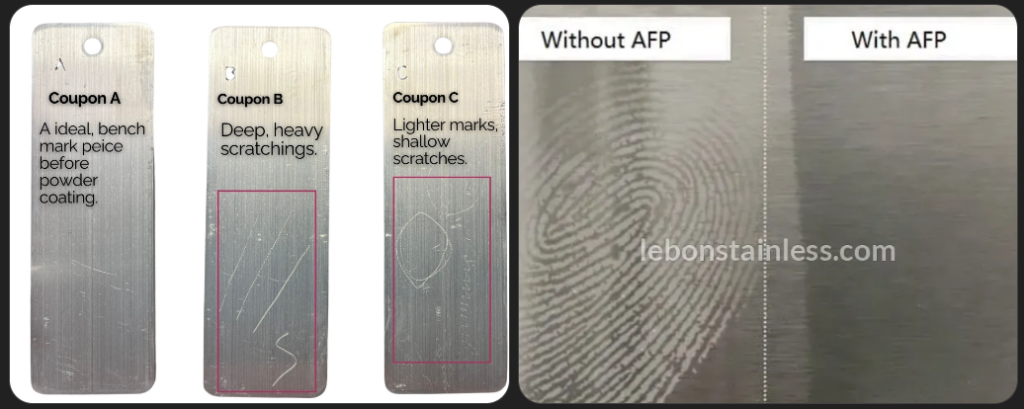
Visual Expression
- Local areas of the metal surface are shiny and oily
- There are obvious fingerprint marks
- Local coating shrinkage (pinholes)
- The coating has small pits or oil stains
- Not absorbing powder locally
Rapid Detection Method
- Water film test: The water does not spread evenly but forms water droplets
- Touch test: The surface feels slippery or greasy
- Cleaning the white paper: Oil stains appear on the paper
- High-temperature baking test: There are signs of oil evaporation
The methods for identifying incomplete phosphating are as follows:
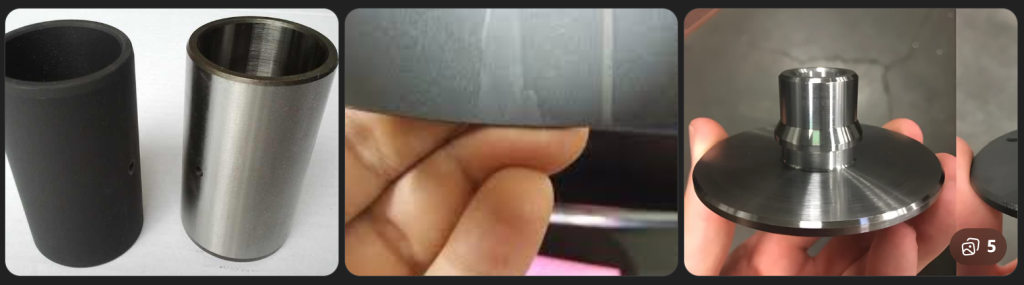
Visual Expression
- Phosphating crystallization is uneven
- Local brightening (exposed metal)
- The layer structure is too thin or lacks a crystal structure
- Presented in sheet-like or speckled forms
- The coating has poor adhesion and severe peeling during the scratch test
Rapid Detection Method
- Grading test → The coating has peeled off significantly
- Salt spray test → Corrosion spreads rapidly
- Neutral water immersion test → Obvious corrosion marks
- The exposed metal areas are clearly reflective
- Observation with a magnifying glass → Lack of uniform phosphating crystals
The most typical defect phenomenon comparison
| phenomena | Likely Cause | Diagnosis |
| Pinholes / craters | Residual oil | Degreasing problem |
| Localized adhesion loss | Fingerprint or grease area | Degreasing |
| Large-area peeling | Non-uniform phosphating layer | Phosphating |
| Poor overall adhesion | No effective phosphating layer | Phosphating |
| Overall poor adhesion | Poor adhesion of the base layer | Phosphating |
| Local powder loss | Affected by oil spots | Degreasing |
Simply distinguish whether it is an oil removal issue or a phosphating issue
- If it's a local issue → It is mostly likely caused by oil contamination
- If the overall adhesion is poor → It is mostly due to phosphating
- If it's only the part that someone has come into contact with → fingerprint oil
- If corrosion spreads rapidly from the steel base in the salt spray environment → The phosphating film becomes thin or uneven
Countermeasure
Fixing Degreasing Problems
- Adjust degreasing chemical concentration
- Increase temperature
- Extend degreasing time
- Improve mechanical action (spray, agitation, ultrasonic)
- Prevent re-contamination by handling with gloves
Fixing Phosphating Problems
- Maintain correct solution concentration
- Control temperature & pH
- Ensure sufficient treatment time
- Rinse thoroughly with de-ionized water
- Maintain bath chemistry & regular monitoring
- https://www.lekamaterial.com/
- https://www.chinacoatingnet.com/